
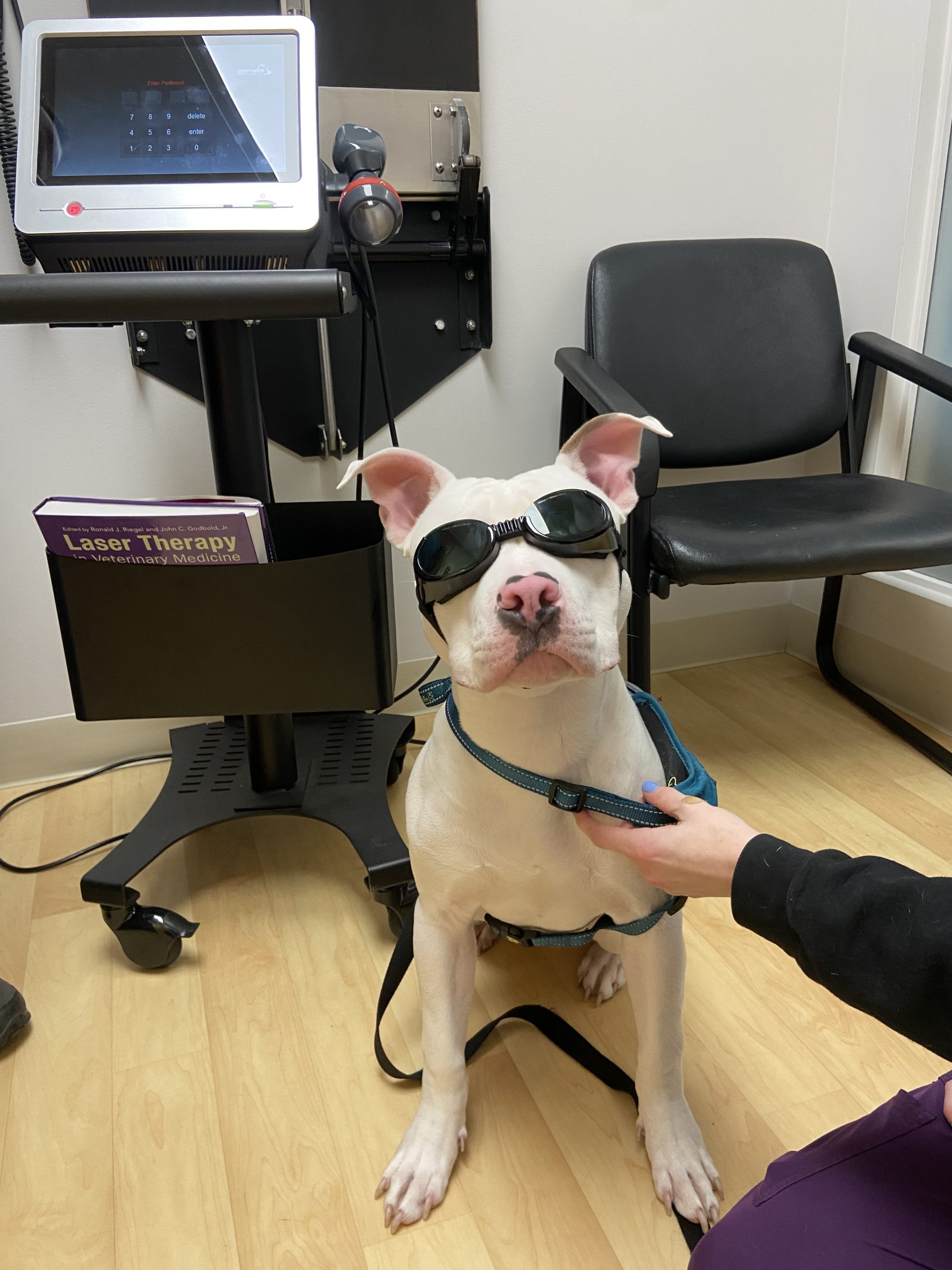
Pet Laser Therapy in Langley, BC
Brookswood Veterinary Hospital is proud to offer advanced therapeutic laser therapy using our Companion Animal Laser. This gentle, non-invasive technology naturally reduces pain and inflammation while speeding the healing process. We use laser therapy after every surgery, and we offer laser therapy sessions for dogs and cats struggling with joint pain, injuries, wounds, and a variety of inflammatory conditions.
Request an AppointmentHow Laser Therapy Works
Therapeutic laser therapy, also called photobiomodulation, uses specific wavelengths of light to penetrate tissue and stimulate cellular activity. This process increases circulation, reduces inflammation, relieves pain, and helps cells repair themselves more efficiently. Treatment is drug-free, surgery-free, and does not require sedation, making it an excellent option for pets of all ages.
Conditions Laser Therapy Can Help Treat
Laser therapy can support healing and comfort for many conditions, including:
- Arthritis and chronic joint pain
- Post-surgical pain and swelling
- Recovery from orthopedic procedures
- Soft tissue injuries, sprains, and strains
- Wounds and slow-healing incisions
- Otitis (ear infections)
- Skin conditions such as pyoderma
- Cystitis (bladder inflammation)
- Dental and oral inflammation
Laser Therapy After Surgery
Every surgical patient at our hospital receives laser therapy as part of their recovery. Treating the incision site after surgery or dental procedures helps reduce post-operative pain and swelling and supports faster healing, so your pet can get back to feeling like themselves sooner.
Laser Therapy for Arthritis and Mobility
For pets living with arthritis or chronic pain, laser therapy can be a valuable part of a long-term comfort plan. It is often combined with chiropractic care, pain management, weight control through our weight loss programs, and joint-support diets from our nutrition program. Laser therapy is especially helpful for older pets enrolled in our senior programs.
What to Expect During a Laser Therapy Session
Sessions are quick, typically lasting just a few minutes per treatment area. Most pets find the treatment relaxing, feeling only a gentle warmth. Protective eyewear is used for safety. The number and frequency of sessions depend on your pet’s condition; acute issues may improve in a few sessions, while chronic conditions like arthritis often benefit from an initial series followed by maintenance treatments.
Before starting laser therapy, our veterinarians perform an exam and may recommend X-rays or lab tests to identify the underlying cause of your pet’s pain or inflammation.
This gentle treatment helps improve comfort and accelerate healing so your pet can feel better, faster. Ask our team how laser therapy can support your pet’s health by calling (604) 534-4174 today.
Pet Laser Therapy FAQs
What is laser therapy for pets?
Laser therapy uses specific wavelengths of light to stimulate cellular activity, increase circulation, and reduce pain and inflammation. It is a gentle, non-invasive, drug-free treatment.
Is laser therapy painful?
No. Most pets find laser therapy relaxing and feel only a mild, soothing warmth. Sedation is not needed.
How long does a laser therapy session take?
Sessions are quick, usually lasting just a few minutes per treatment area.
How many laser therapy sessions will my pet need?
It depends on the condition. Acute injuries may improve after a few sessions, while chronic conditions such as arthritis often benefit from an initial series followed by maintenance treatments.
What conditions can laser therapy treat?
Laser therapy can help with arthritis, joint pain, post-surgical recovery, soft tissue injuries, wounds, ear infections, skin conditions like pyoderma, and bladder inflammation.
Do you use laser therapy after surgery?
Yes. We use our Companion Animal Laser after every surgery to reduce pain and swelling and help speed healing.
Can laser therapy be combined with other treatments?
Yes. Laser therapy works well alongside pain medication, chiropractic care, weight management, and nutritional support as part of a multimodal care plan.
