

Veterinary Medical Imaging in Langley, BC
Medical imaging allows our veterinarians to see what is happening inside your pet’s body so we can diagnose problems accurately and create the best possible treatment plan. At Brookswood Veterinary Hospital, we use advanced digital X-ray and ultrasound technology and collaborate with trusted specialists to ensure your dog or cat receives high-quality, comprehensive diagnostic care.
Request an Appointment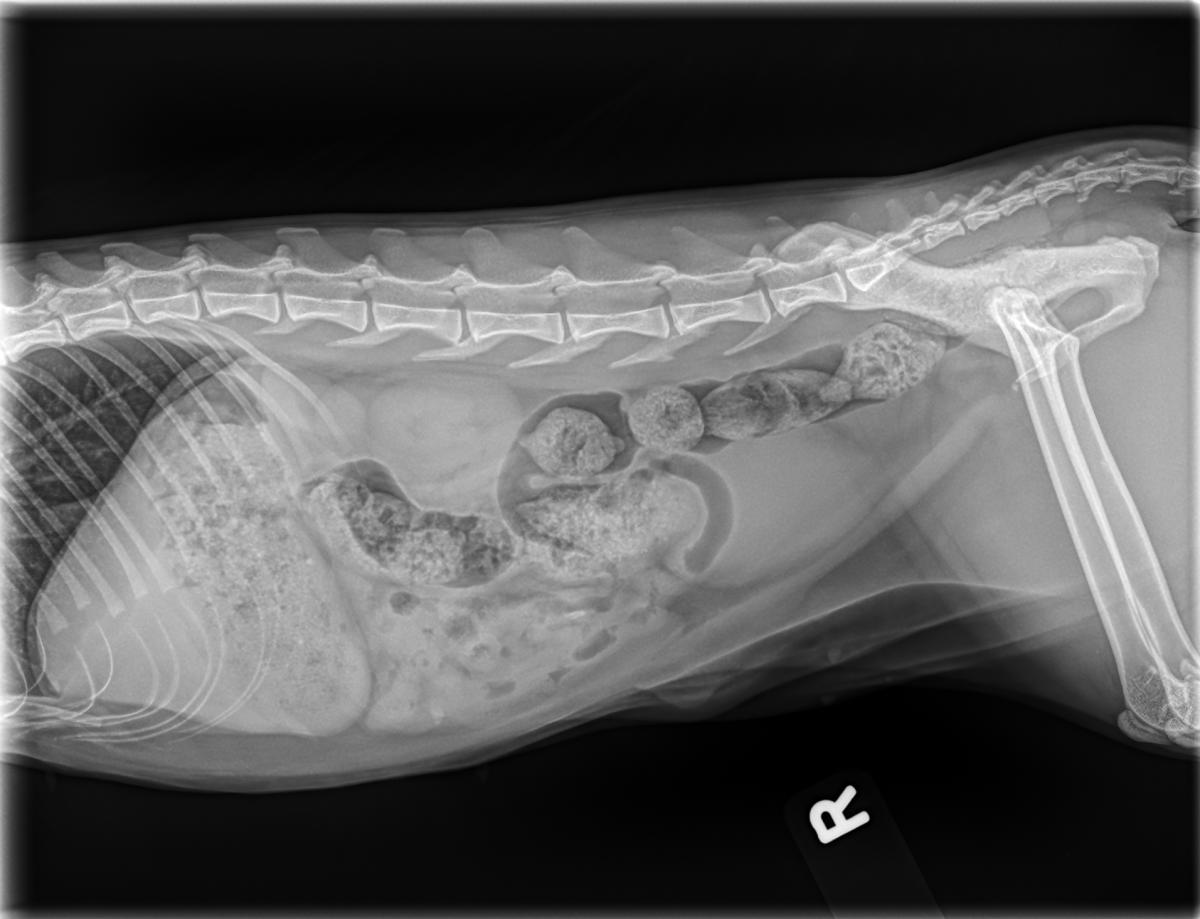
Digital X-Rays for Dogs and Cats
Our hospital has two digital X-ray systems: a full-size digital X-ray unit for evaluating the chest, abdomen, bones, and joints, and a dedicated dental X-ray unit that lets us assess tooth roots and underlying bone, areas that cannot be seen during a routine oral exam. Digital X-rays offer faster image capture, excellent image quality, and images that are immediately available for review, added to your pet’s medical record, and easily shared with specialists. When a case calls for additional expertise, we consult with a board-certified veterinary radiologist for expert interpretation.
Request an AppointmentUltrasound Imaging
Ultrasound allows us to evaluate internal organs in real time and is especially helpful for assessing the abdomen and heart. Because it uses sound waves rather than radiation, ultrasound is a safe, non-invasive way to examine the liver, kidneys, bladder, spleen, intestines, and other soft tissue structures.
We also use a handheld, in-house ultrasound unit for focused, point-of-care ultrasound (POCUS) exams when a quick assessment is needed to guide immediate care, such as in pets with sudden illness or trauma.
Abdominal Ultrasounds and Echocardiograms In-House
Comprehensive abdominal ultrasounds and echocardiograms are performed in-house by Dr. Doug Casey, a diplomate of the American Board of Veterinary Practitioners in canine and feline medicine. Having this level of expertise at our Langley hospital means your pet can often receive advanced imaging without a referral. We also work closely with a local board-certified veterinary radiologist for advanced imaging needs, including CT scans, urgent ultrasound exams, and X-ray interpretation.
When Your Pet May Need Imaging
Our veterinarians may recommend X-rays or ultrasound to help evaluate:
- Vomiting, diarrhea, or suspected swallowed foreign objects
- Coughing, breathing difficulties, or heart murmurs
- Limping, joint pain, fractures, or arthritis
- Bladder stones and urinary problems
- Abdominal masses or organ enlargement
- Dental disease and tooth root problems through our dental programs
- Pre-surgical planning for veterinary surgery
Imaging as Part of a Complete Diagnostic Workup
Imaging results are often combined with bloodwork and urinalysis from our laboratory diagnostics services to give a complete picture of your pet’s health. For older pets, imaging can be an important part of our senior programs to detect changes early. When imaging reveals arthritis or joint problems, supportive therapies such as laser therapy and chiropractic care may be part of your pet’s treatment plan.
Is Imaging Stressful for My Pet?
X-rays and ultrasound are painless. Some pets may need mild sedation to stay still and comfortable, which also helps us capture clearer images. Our team follows Fear Free™ principles to keep your pet as calm as possible throughout the process.
To learn more about our imaging services or schedule a diagnostic appointment, call (604) 534-4174 or explore all of our veterinary services.
Veterinary Imaging FAQs
What types of imaging do you offer?
We offer full-size digital X-rays, dedicated dental X-rays, abdominal ultrasound, echocardiograms, and point-of-care ultrasound. We also work with a board-certified veterinary radiologist for CT scans and advanced interpretation.
Are X-rays safe for my pet?
Yes. Digital X-rays use a very low dose of radiation and provide fast, high-quality images. The benefits of an accurate diagnosis far outweigh the minimal exposure.
Does my pet need sedation for X-rays or ultrasound?
Some pets can be imaged while awake, while others benefit from mild sedation to stay still and relaxed. Sedation helps produce clearer images and reduces stress.
What is an echocardiogram?
An echocardiogram is an ultrasound of the heart that evaluates its structure, chambers, valves, and function. It is often recommended for pets with heart murmurs or signs of heart disease.
Who performs ultrasounds at your hospital?
Comprehensive abdominal ultrasounds and echocardiograms are performed in-house by Dr. Doug Casey, a diplomate of the American Board of Veterinary Practitioners in canine and feline medicine.
Why are dental X-rays important?
Dental X-rays show tooth roots and the surrounding bone, revealing hidden infection, fractures, and resorption lesions that cannot be seen during a routine exam.
Can my pet’s images be shared with specialists?
Yes. All X-rays are digital, so images can be quickly and easily shared with board-certified specialists when a second opinion or expert interpretation is needed.
